
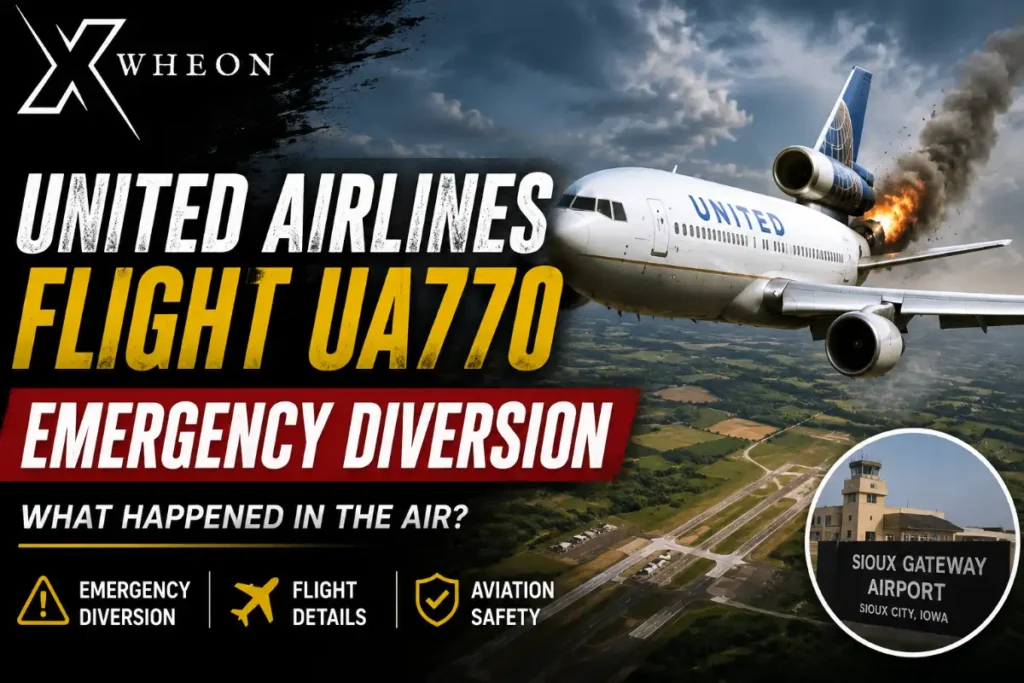

Air travel is usually considered one of the safest ways to travel. Every day thousands of flights safely take off and land around the world without any issue. But sometimes unexpected technical failures or emergency situations remind people that aviation still carries risks, even with modern technology and strict safety systems.
Recently, the keyword “United Airlines Flight UA770 emergency diversion” started getting attention online, and many people became curious about what emergency diversions actually mean and how pilots handle dangerous situations in the air. Whenever passengers hear words like emergency landing, diversion, or technical fault, panic naturally starts building because nobody wants to imagine something going wrong thousands of feet above the ground.
While aviation technology has improved massively over the years, history has shown that even experienced airlines and advanced aircraft can suddenly face critical emergencies. One of the most famous aviation disasters connected to United Airlines happened decades ago with United Airlines Flight 232. Even today, that incident is remembered as one of the most shocking yet heroic moments in aviation history because of the incredible efforts made by the flight crew to save lives.
The story behind emergency diversions and aircraft failures is not only about accidents. It is also about pilot training, quick decision-making, survival, and how aviation safety rules improved after tragic incidents.
What Is An Emergency Diversion In Aviation?
An emergency diversion happens when a flight cannot continue safely toward its original destination and pilots decide to land at another airport instead. This decision is never taken casually. Pilots only divert flights when they believe passenger safety could be affected.
There are many reasons why emergency diversions happen:
- Engine problems
- Smoke inside cabin
- Hydraulic failures
- Medical emergencies
- Bad weather
- Bird strikes
- Fuel concerns
- Electrical system faults
Sometimes the issue turns out to be small after landing, but airlines always prioritize safety first. Even minor warning signs can force pilots to divert because no airline wants to take unnecessary risks in the air.
Passengers often become nervous during these situations, but emergency diversions actually show how aviation safety systems are designed to prevent disasters before they happen.
The Story Of United Airlines Flight 232
Whenever people discuss major emergency landings involving United Airlines, Flight 232 is one of the first incidents that comes to mind.
United Airlines Flight 232 was scheduled to fly from Denver to Chicago on July 19, 1989. The aircraft was a McDonnell Douglas DC-10 carrying 285 passengers and 11 crew members.
For the first hour, everything looked completely normal. The flight was smooth and passengers had no idea that within minutes the aircraft would face one of the worst emergencies in aviation history.
At around 3:16 PM, a fan blade inside the tail-mounted engine suddenly failed. The engine exploded violently, and debris from the explosion damaged all three hydraulic systems of the aircraft.
This was an extremely dangerous situation because hydraulic systems control the airplane’s steering and movement. Without hydraulics, pilots could barely control the aircraft properly.
Passengers heard a loud explosion and immediately felt the plane shaking heavily. The aircraft started rolling and turning unexpectedly. Inside the cockpit, Captain Alfred Haynes and his crew quickly realized that normal flight controls were no longer responding.
Imagine the fear inside that aircraft at that moment. A large commercial airplane flying at high altitude suddenly becoming almost impossible to control.
Read More Also – Cricket 07 Download
How The Pilots Tried To Save The Plane
What happened next is still studied in aviation training today because of the incredible teamwork shown by the crew.
Since the aircraft controls stopped working, the pilots tried using engine power itself to steer the plane. By adjusting thrust between the left and right engines, they managed to slowly influence the aircraft’s direction.
Another important person onboard was Dennis Fitch, a United Airlines training instructor who happened to be traveling as passenger in first class. He volunteered to help inside the cockpit.
Together, the crew desperately tried to stabilize the aircraft while heading toward Sioux Gateway Airport in Sioux City, Iowa.
The plane kept making unstable turns during the flight. Controlling it was extremely difficult because the pilots no longer had proper steering systems. Still, somehow they managed to guide the damaged aircraft toward the airport.
Honestly, many aviation experts later said the fact that the plane stayed airborne that long was almost unbelievable.
The Crash Landing At Sioux City
As Flight 232 approached the runway, the aircraft was descending much faster than normal. The crew had very limited control and could not line the aircraft perfectly.
When the plane touched the ground, the right wing hit first and broke apart. The aircraft bounced violently, rolled, and eventually broke into several sections before stopping in a field near the airport.
Fuel immediately caught fire after impact.
Emergency rescue teams were already waiting because air traffic controllers knew the landing would likely end badly. Firefighters and medical teams rushed toward the wreckage within seconds.
Out of the 296 people onboard, 184 survived. Sadly, 112 people later lost their lives because of crash injuries and smoke inhalation.
Even though the accident was tragic, the survival of more than half the passengers was considered almost miraculous considering the level of damage and complete hydraulic failure.
Many experts believe the crew’s actions saved countless lives that day.
Why Flight 232 Changed Aviation Safety
After the crash investigation, aviation authorities realized how dangerous it was for all hydraulic systems to be located in vulnerable positions inside aircraft.
The accident led to many safety improvements:
- Better turbine inspections
- Stronger aircraft design protections
- Improved hydraulic system separation
- Advanced emergency training for pilots
- New aircraft safety procedures
The aviation industry learned important lessons from the disaster, and those lessons helped improve aircraft safety for future generations.
Even today Flight 232 is used as example during pilot training programs worldwide.
Read More Also – Wheon Online Gaming
Why People Still Search About United Airlines Emergencies
Whenever people hear about terms like “United Airlines Flight UA770 emergency diversion,” curiosity spreads quickly online because aviation incidents naturally grab public attention.
Many passengers become anxious during flights, so hearing about emergency landings or diversions immediately raises concern.
But one important thing people should understand is that emergency diversions do not always mean crashes or disasters. In fact, most diversions end safely because pilots act early before situations become worse.
Modern aviation has:
- Advanced warning systems
- Highly trained pilots
- Backup safety systems
- Emergency protocols
- Improved communication technology
All these things help reduce risks significantly compared to older aviation eras.
Aviation Has Become Safer Over The Years
Despite rare accidents and emergency diversions, air travel today is safer than ever before.
Aircraft now go through:
- Strict maintenance checks
- Advanced monitoring systems
- Real-time diagnostics
- Pilot simulation training
- Emergency preparation exercises
Pilots spend years training for situations most passengers never even imagine.
That’s why even serious mechanical problems often end with safe emergency landings instead of disasters.
Still, stories like Flight 232 remain important because they remind the aviation industry never to become careless about safety.
Final Thoughts
The attention around “United Airlines Flight UA770 emergency diversion” shows how much people care about airline safety and emergency situations. Aviation emergencies may sound frightening, but they also highlight the skill, training, and quick thinking required by pilots and flight crews.
The story of United Airlines Flight 232 remains one of the most emotional and unforgettable incidents in aviation history. Even after complete hydraulic failure, the crew fought to keep the aircraft under control and saved many lives through teamwork and courage.
Incidents like these changed aviation forever. New safety rules, better aircraft designs, and improved pilot training all came from lessons learned through tragic accidents.
Today, while emergency diversions still happen from time to time, modern aviation systems are far more prepared to handle dangerous situations than ever before. And honestly, that continuous focus on safety is one of the biggest reasons millions of people still trust air travel every single day.
Read More Also – EA Sports Cricket 2019